For many families, accessing speech therapy has traditionally come with some barriers. Long waitlists, limited local providers, transportation challenges, and scheduling conflicts can often stand in the way of consistent care. Telehealth has rapidly changed that landscape. By bringing speech therapy directly into homes for all ages through secure online platforms, telehealth is expanding access and reshaping how clients and families receive support across the globe.

Breaking Down Geographic Barriers
One of the most significant advantages of telehealth speech therapy is its ability to reach clients regardless of location. In rural or underserved areas, speech-language pathologists can be in short supply. Clients may need to travel far to reach the nearest clinic or go without services altogether.
Telehealth eliminates distance as a barrier. With a stable internet connection, children and adults can connect with licensed speech-language pathologists who specialize in their specific needs. This means families and clients no longer have to choose between quality care and convenience. Access to specialists in all areas of speech-language pathology becomes possible no matter where a family lives.
Reducing Time and Transportation Challenges
Busy schedules and transportation issues can become a common struggle to maintain consistent therapy. Between school, work, extracurricular activities, and other appointments, fitting in in-person sessions can feel overwhelming.
Telehealth allows therapy sessions to take place from a client’s home or preferred location, reducing time spent commuting and waiting in offices. This increased flexibility often leads to better attendance and consistency, which is a key factor in successful speech and language outcomes.
Supporting Working Parents and Caregivers
For many caregivers, taking time off work or other obligations to attend therapy appointments is not always possible. Telehealth offers more scheduling flexibility, including early morning, evening, or even weekend appointments in some cases. Additionally, families with multiple children can more easily manage appointments without arranging additional childcare.
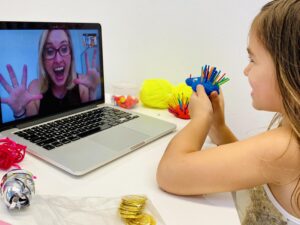
Because sessions happen at home, caregivers can be more involved. This involvement is especially important in speech therapy, where carryover of skills into daily routines plays a critical role in progress. Telehealth makes it easier for families to observe strategies, ask questions, and practice techniques in real time.
Creating Comfortable Learning Environments
People often feel more relaxed and confident in familiar environments. Receiving speech therapy at home can reduce anxiety and give individuals the opportunity to engage more naturally during sessions. This is especially prevalent in certain diagnoses, including autism spectrum disorder. Therapists can also incorporate a client’s own toys, books, and daily routines into therapy activities, making sessions more functional and meaningful. This comfort can lead to increased participation, especially for individuals working on social communication, fluency, or voice therapy.
Research shows that telehealth therapy is just as effective as in-person therapy. An article by All Care Therapies states, “The research is clear: for many patients, telehealth is a proven, effective, and patient-centered way to deliver therapy. When clinicians select appropriate cases, use evidence-based practices, and engage caregivers, teletherapy can achieve results equal to—and sometimes better than—traditional models.”
Increasing Access for Diverse Needs
Telehealth has also improved access for clients and families with diverse needs. Clients with medical complexities, mobility challenges, or compromised immune systems can safely receive therapy without exposure to crowded waiting rooms.
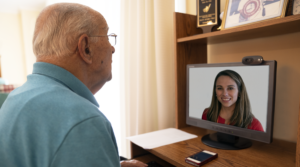
Telehealth speech therapy can target many areas including: neurodiversity (autism), Down syndrome, speech sound disorders (articulation, phonological disorders, lisps), aphasia, dysarthria, neurodegenerative diseases (dementia, Alzheimer’s disease, Parkinson’s disease), neurological conditions (stroke, traumatic brain injury, apraxia), accent modification, language disorders (expressive and receptive), deaf/ hard of hearing, social communication, literacy, fluency disorders (stuttering), orofacial myofunctional disorders (tongue ties, tongue thrusting), voice disorders, selective mutism, sign language, developmental disorders (intellectual disability), late talkers, learning differences (dyslexia, auditory processing disorder), cognitive-communication disorders, and more.
Additionally, telehealth platforms often support bilingual services by connecting families with clinicians who speak their home language, as well as supporting parent/ caregiver coaching to carry over skills into daily routines.
Maintaining High Quality Care
A common concern about telehealth is whether it is as effective as in-person therapy. Research and clinical experience continue to show that telehealth speech therapy can be just as effective when delivered appropriately. Licensed speech-language pathologists use evidence-based practices, interactive digital tools, and caregiver coaching to support progress.
According to All Care Therapies, “When clinicians apply evidence-based interventions through telehealth, patient progress can be just as strong as with traditional sessions—sometimes with the added benefit of greater accessibility and family participation.”
Telehealth sessions are structured, goal-driven, and individualized, just like in-person therapy. Many platforms also allow for secure sharing of resources, home practice activities, and progress updates, keeping families informed and engaged throughout the therapy process.
Looking Ahead
Telehealth is not just a temporary solution. It is an evolving model of care that continues to expand access and flexibility for individuals everywhere. While in-person therapy will always have an important role, telehealth offers an inclusive option that meets clients where they are.
By removing barriers related to location, time, and transportation, telehealth speech therapy empowers families to prioritize communication goals without sacrificing convenience. As technology continues to advance, telehealth will remain a powerful tool in ensuring that speech therapy is accessible, effective, and patient-centered for all.
________________________________________________________________________________________________
Resource:
-HANNA MOELLER, Senior Research and Marketing Intern
-NICOLE BUTLER, M.S., CCC-SLP/L (ASHA Certified and licensed Speech-Language Pathologist, Founder and Executive Director of Speech Within Reach.)
SPEECH WITHIN REACH provides in-person and virtual telehealth speech therapy for children and adults. We are grateful to support your speech therapy needs. Please feel free to reach out to us.